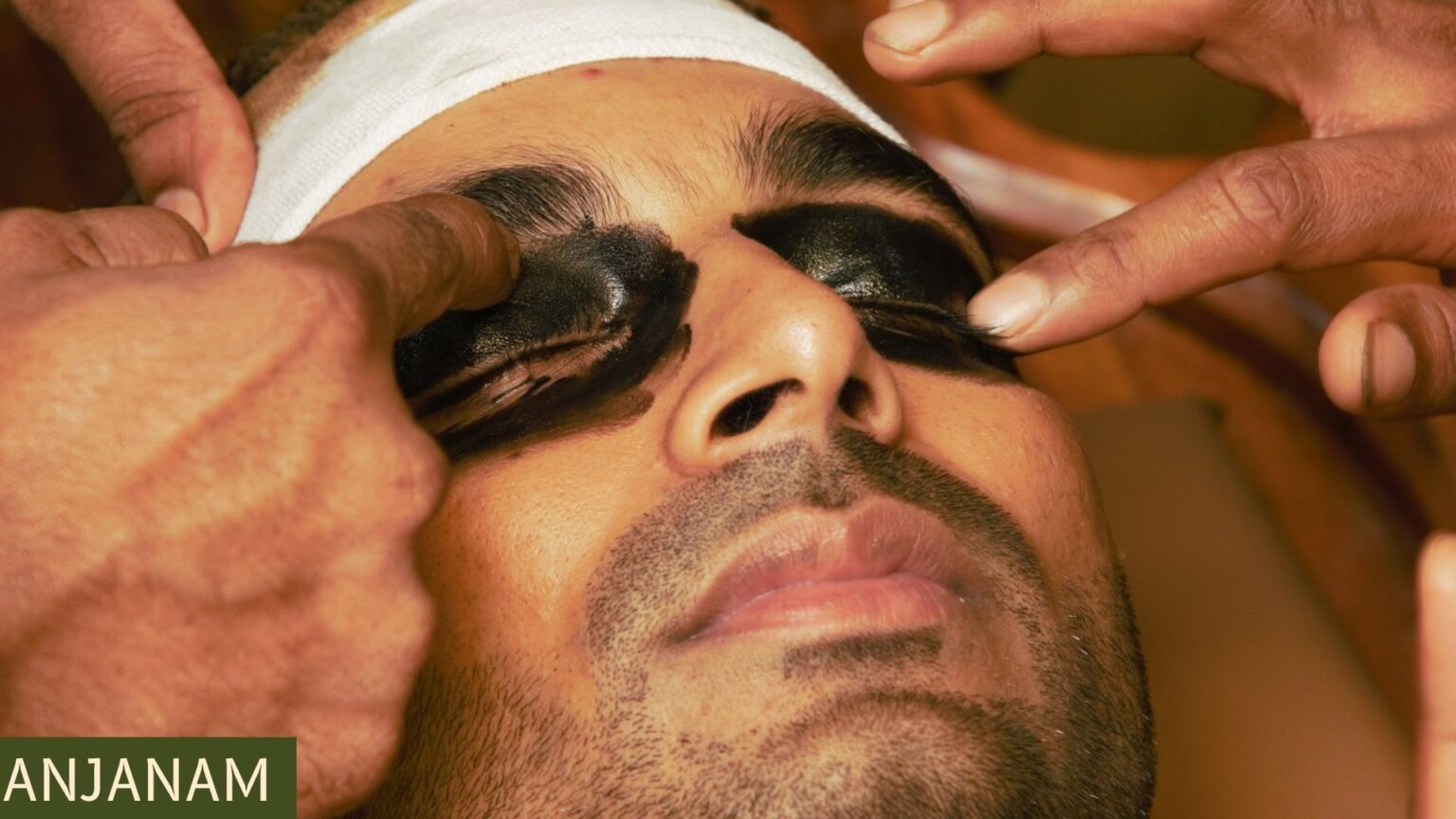
Anjanam is a specialized Netra Kriya Kalpa (therapeutic eye treatment) in Ayurveda that involves the application of medicated collyrium (Anjana) to the inner conjunctival surface of the eyes. This therapy is primarily used for cleansing, rejuvenating, and enhancing vision while treating various eye disorders.
According to Sushruta Samhita and Ashtanga Hridaya, Anjana Karma is recommended as a part of Dinacharya (daily regimen) to protect the eyes from Vata (dryness, weakness), Pitta (redness, burning), and Kapha (excessive secretions, heaviness) imbalances. It is an effective therapy for preventing Timira (blurred vision or early cataract) and maintaining Drishti Prasadanam (eye clarity and health).
Anjana is categorized based on its therapeutic effect and the dominant dosha imbalance:
1. Lekhana Anjana (Scraping Collyrium) Used for Kapha Dosha imbalances in the eyes Indications: Excessive tearing, stickiness, heaviness, and cloudy vision. Key Ingredients: Saindhava Lavana (rock salt), Haritaki (Terminalia chebula), Triphala, Maricha (black pepper).
2. Ropana Anjana (Healing Collyrium)Used for Pitta-related eye disorders with inflammation and redness. Indications: Burning sensation, redness, ulceration, and photophobia. Key Ingredients: Daruharidra (Berberis aristata), Yashtimadhu (Glycyrrhiza glabra), Sphatika Bhasma (alum ash), Madhu (honey).
3. Snehana Anjana (Lubricating Collyrium) Used for Vata-related eye conditions that cause dryness and weakness. Indications: Dry eyes, blurred vision, eye fatigue, and neurological conditions. Key Ingredients: Go-Ghrita (cow ghee), Eranda Taila (castor oil), Tila Taila (sesame oil), Yashtimadhu (licorice).
The patient is seated comfortably with their head slightly tilted back. The eyes are gently washed with Triphala Kashaya (herbal decoction) or rose water. If required, Swedana (mild fomentation) is performed around the eyes using a warm cloth to enhance absorption.
A medicated Anjana stick (or collyrium applicator) is used to apply the formulation to the lower conjunctival fornix (inner eyelid).
The patient is advised to blink several times to allow even spreading of the medication.
In case of Lekhana Anjana, a mild burning or tingling sensation may be experienced initially, which is a sign of Kapha removal.
For Ropana and Snehana Anjana, the patient may experience a cooling or soothing effect immediately.
The therapy duration varies between 3-5 minutes, depending on the individual's tolerance and condition.
The eyes are cleaned with a soft cloth or sterile cotton.
The patient is advised to rest in a dimly lit room for at least 30 minutes.
Avoid exposure to direct sunlight or screen time immediately after the therapy.
Dietary modifications, such as avoiding spicy and hot foods, may be recommended if treating Pitta-related disorders.
Anjanam is a time-tested Ayurvedic therapy for maintaining eye health and preventing disorders. Regular use of Triphala Anjanam or Ghee-based Anjana can provide long-term benefits, keeping the eyes clear, nourished, and disease-free.