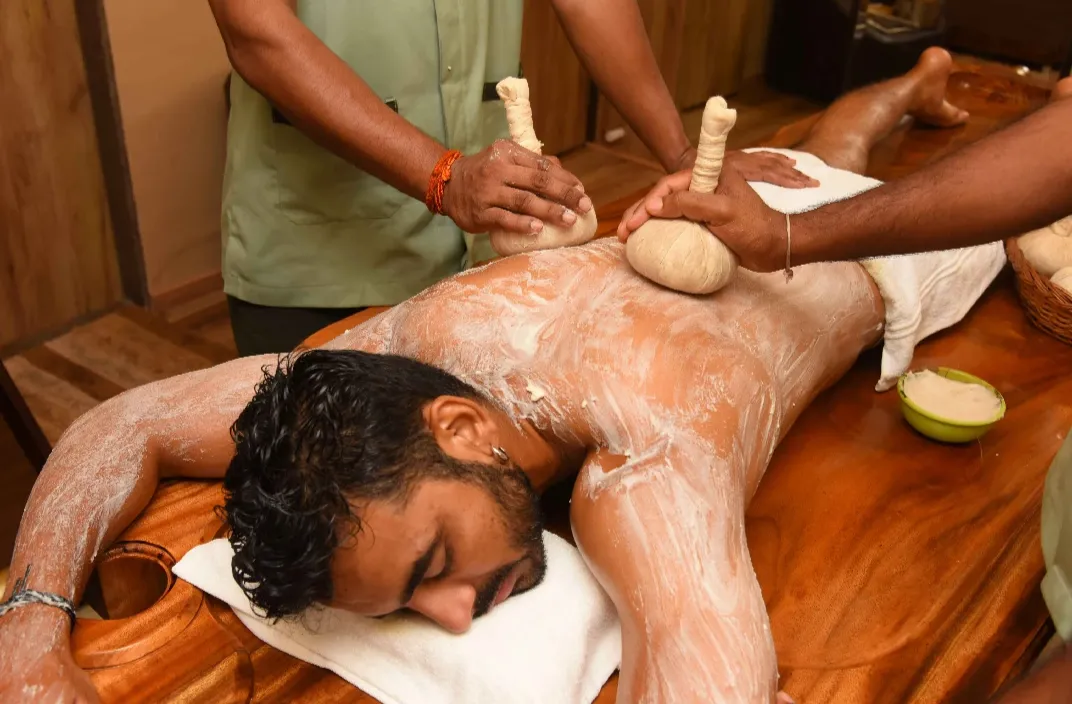
Njavarakizhi is a specialized Swedana (sudation) therapy in Ayurveda, where the body is massaged with boluses containing Njavara (medicated rice) cooked in herbal decoctions and milk. This therapy is deeply rejuvenating and is particularly beneficial in degenerative diseases, neuromuscular disorders, and conditions involving muscle wasting and weakness.
It is known for its nourishing, strengthening, and anti-inflammatory properties, making it an ideal treatment for individuals suffering from arthritis, paralysis, muscular dystrophy, and post-stroke rehabilitation.
This therapy is beneficial for:
Neuromuscular disorders
Muscle wasting and weakness
Joint pain and stiffness
Paralysis and stroke recovery
Osteoarthritis and rheumatoid arthritis
Chronic fatigue and body weakness
Njavarakizhi primarily works by balancing Vata and Pitta doshas, reducing inflammation, improving blood circulation, and nourishing the tissues.
The patient is made to lie on a Droni (therapy table) in a comfortable position. A gentle Abhyanga (oil massage) is performed using medicated oils like Dhanwantharam Taila or Ksheerabala Taila. The Njavara rice is cooked in medicated milk and herbal decoctions, and tied into a bolus using a cotton cloth.
The warm boluses are rhythmically applied to the body in synchronized strokes. The boluses are continuously reheated in the medicated milk mixture to maintain a consistent temperature. The procedure lasts for 45–60 minutes, ensuring deep tissue nourishment. The therapy is typically done for 7–14 days, depending on the condition.
The patient is allowed to rest for 15–30 minutes after therapy. Excess medicated rice paste is gently wiped off the skin. The patient is advised to follow a light diet and avoid cold exposure. Herbal supplements may be recommended to support tissue rejuvenation.
Njavarakizhi is a powerful Ayurvedic therapy that provides deep nourishment, strength, and rejuvenation to the muscles and joints. It is particularly effective for neuromuscular disorders, arthritis, muscle wasting, and post-stroke recovery. Regular sessions can restore energy, improve mobility, and enhance overall well-being.