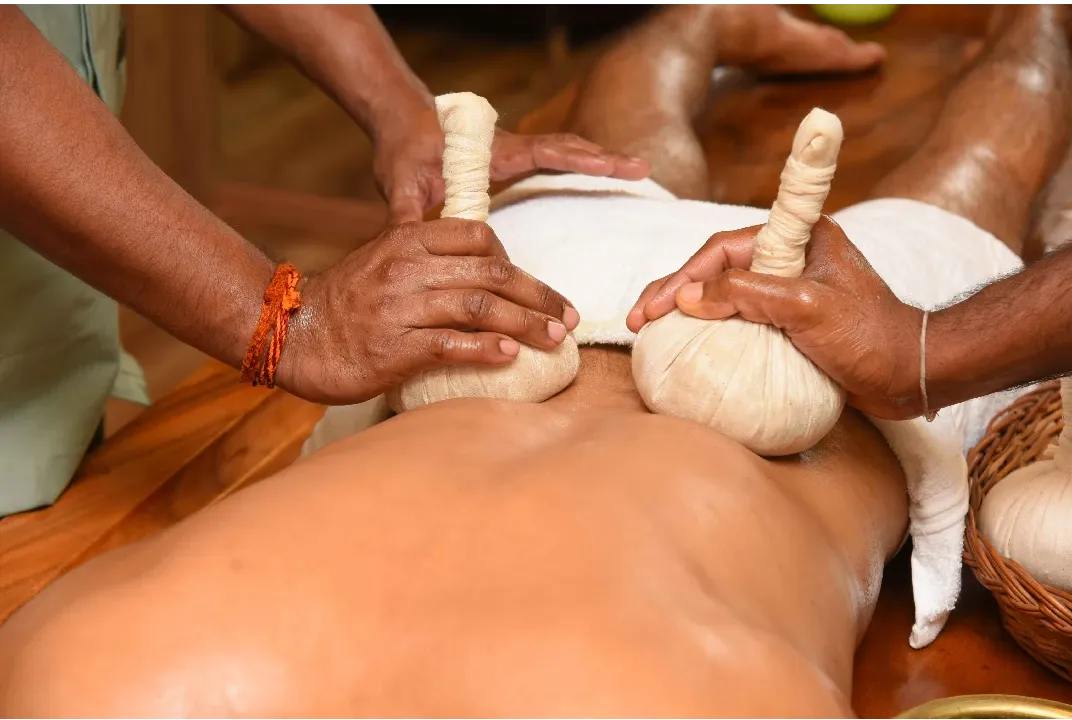
Podikizhi, also known as Choorna Pinda Sweda (herbal powder bolus sudation therapy), is a highly effective Ayurvedic treatment for pain relief, inflammation, and stiffness in the body. This therapy involves the application of heated herbal powders tied in a bolus to induce sweating and improve circulation.
Podikizhi is particularly beneficial for:
Arthritis and joint pain
Muscle stiffness and inflammation
Neuromuscular disorders
Back pain, cervical spondylosis, and frozen shoulder
Obesity and Kapha-related conditions
Podikizhi primarily balances Vata and Kapha doshas, reducing stiffness, improving flexibility, and relieving musculoskeletal discomfort.
The selected herbal powders are heated with medicated oils or herbal decoctions. The heated mixture is tied in a cotton cloth to form boluses. The patient is made to lie down on the Droni (therapy table) in a comfortable position. A gentle Abhyanga (oil massage) is performed using warm Mahanarayana Taila or Dhanwantharam Taila.
The heated bolus is rhythmically applied over the affected area or the whole body. The bolus is continuously reheated to maintain warmth. Circular, linear, and tapping movements are used for deep tissue penetration. The procedure lasts for 30–45 minutes, allowing deep absorption.
Excess oil is gently wiped off with a soft towel. The body is gently wiped with a warm towel to remove excess oil and herbal residue. The patient is allowed to rest for 30 minutes after therapy. A light diet and warm herbal drinks are advised post-treatment.
Podikizhi is an effective pain-relief and detoxification therapy that provides deep warmth, relaxation, and improved mobility. It is particularly beneficial for arthritis, muscle stiffness, and Kapha-related disorders. Regular sessions can enhance joint flexibility, reduce inflammation, and promote overall well-being.