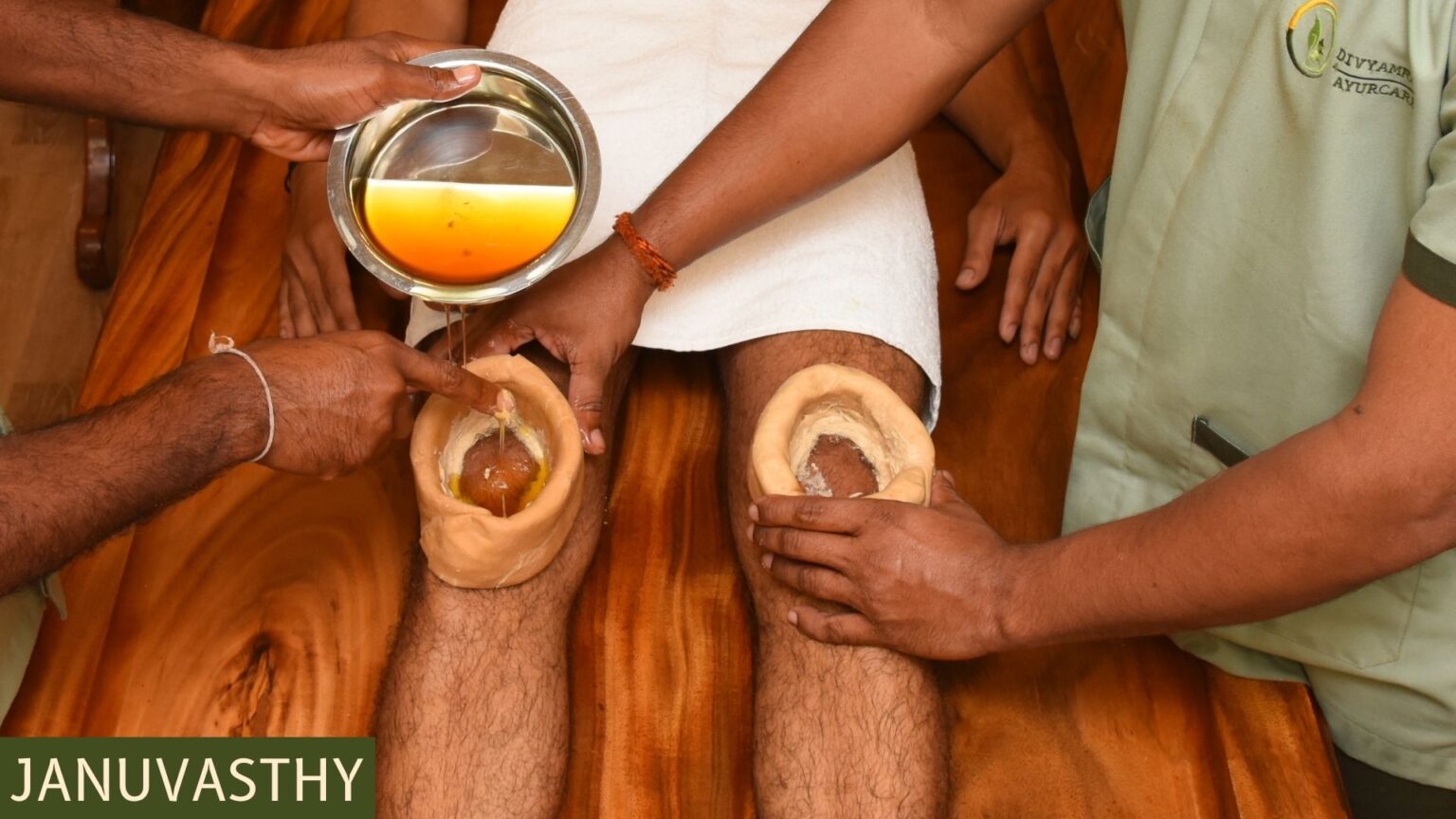
Januvasthy is an Ayurvedic external therapy that involves the retention of warm medicated oil over the knee joint (Janu Sandhi) to relieve pain, stiffness, inflammation, and degenerative conditions affecting the knees.
The term Januvasthy comes from:
Janu (जानु) – Knee
Vasthy (वस्थि) – Retention or pooling
This therapy is particularly effective for osteoarthritis (Sandhigata Vata), rheumatoid arthritis (Ama Vata), ligament injuries, and knee joint degeneration. By allowing the warm medicated oil to deeply penetrate the knee joint, Januvasthy helps lubricate the joints, improve circulation, and strengthen the surrounding tissues.
The patient is positioned lying down or seated comfortably with the knees exposed. A gentle Abhyangam (oil massage) is performed around the knee with Maha Narayana Taila or Dhanwantharam Taila to prepare the tissues. A leak-proof dough ring (Basti Kunda) is prepared using black gram flour, placed around the knee, and fixed securely to retain oil.
Warm medicated oil is carefully poured into the dough ring, submerging the knee joint. The oil is maintained at a therapeutic temperature (around 40°C) by continuously replacing it with warm oil. The oil is retained for 30–45 minutes, allowing deep penetration into muscles, ligaments, and joints. During the therapy, mild circular massage (Mardana) is performed for better absorption. This process is repeated for 7–14 days, depending on the condition.
The oil is slowly removed, and the area is cleaned with a warm herbal decoction. A mild herbal steam therapy (Nadi Swedana) is applied to enhance relaxation. The patient is advised to avoid cold exposure, sudden movements, and heavy physical work for a few hours. Dietary changes are suggested to balance Vata and Ama in the body.
Januvasthy is a highly effective Ayurvedic therapy for chronic knee pain, osteoarthritis, ligament injuries, and nerve-related disorders. By deeply nourishing and rejuvenating the knee joint, it helps prevent degenerative conditions, improves mobility, and enhances overall joint health.