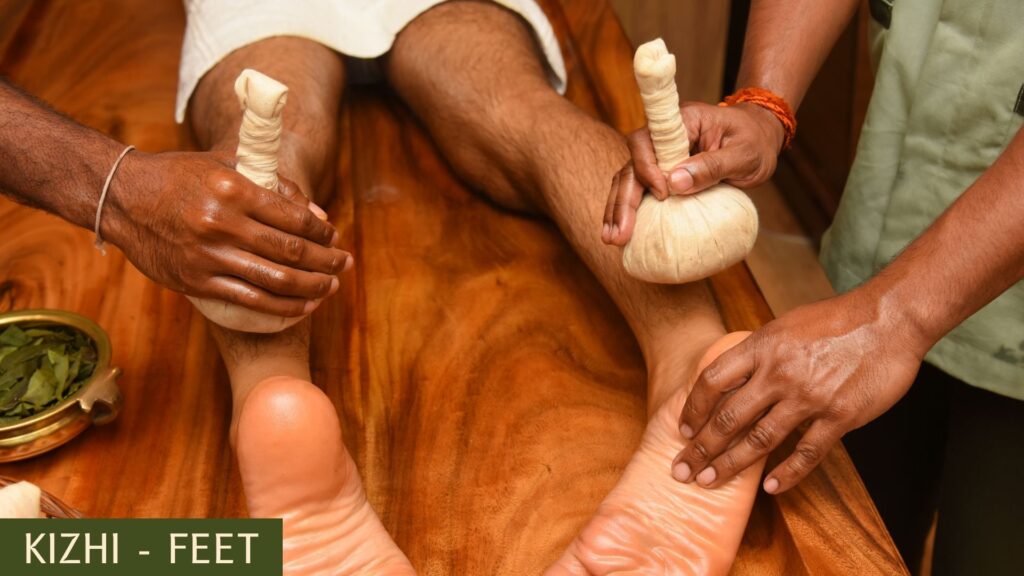
Kizhi Feet is a specialized Ayurvedic herbal bolus therapy focused on the feet (Pada Pradesh) to relieve pain, improve circulation, and strengthen muscles and nerves. It involves the application of heated herbal poultices (Kizhi) over the soles, heels, and ankles to reduce stiffness, swelling, and fatigue.
Kizhi Feet therapy is highly beneficial for individuals suffering from:
Diabetic neuropathy (Madhumehaja Pada Daurbalya)
Plantar fasciitis (Pada Shoola)
Heel pain and calcaneal spurs (Vata-Kapha Vikara)
Cracked heels (Pada Vranam)
Foot swelling and poor circulation (Shotha Roga)
By stimulating marma points (vital energy points) in the feet, this therapy enhances nerve function, detoxification, and overall foot health.
The patient is seated or made to lie down comfortably. A mild foot massage (Pada Abhyanga) is done using warm medicated oil to prepare the tissues. The herbal bolus (Kizhi) is heated by dipping it in warm medicated oil or steam.
The heated poultice is gently pressed and rubbed over the soles, heels, and ankles in rhythmic motions. The therapist applies gentle to moderate pressure, depending on the patient’s condition. Special attention is given to painful areas, marma points (vital energy points), and pressure points on the feet. The therapy is performed for 30–45 minutes, maintaining consistent warmth throughout. The process may be repeated for 7–14 days, based on the severity of symptoms.
The feet are wiped clean with a warm herbal towel. The patient is advised to rest for 15–30 minutes and avoid immediate exposure to cold. A light herbal foot soak (Pada Prakshalana) with medicated decoctions may be given for enhanced relaxation. The patient is encouraged to wear soft, comfortable footwear and avoid prolonged standing.
Kizhi Feet therapy is an effective Ayurvedic treatment for foot pain, nerve weakness, and circulation issues. It is widely used for conditions like diabetic neuropathy, plantar fasciitis, and varicose veins, providing natural relief and rejuvenation.