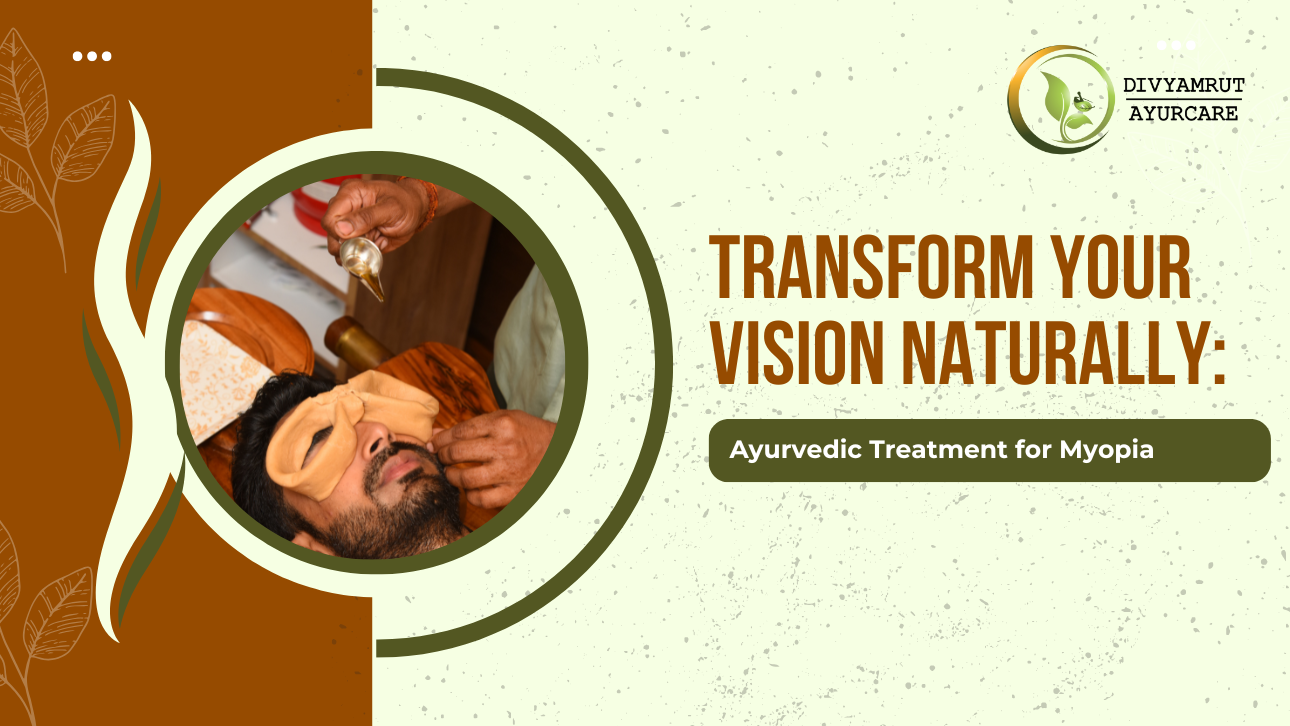
Myopia, often known as nearsightedness, has become more widespread in recent years, owing to increased screen time, decreased outdoor activities, and inadequate eye care. While corrective lenses and surgical procedures can provide temporary or immediate relief, they frequently fail to address the underlying reasons of the problem. Ayurveda’s holistic approach provides a long-term and natural solution for treating myopia. At Divyamrut Ayurcare, we offer a variety of professional therapies, herbal remedies, and lifestyle advice to ensure comprehensive care for improved vision and general eye health.
Myopia is a refractive defect in which the eye does not bend or refract light properly. Normally, light enters the eye and focuses on the retina, the light-sensitive layer at the rear of the eye. The retina then turns the light into signals, which are transmitted to the brain and interpreted as images.
Myopia occurs when the eyeball is excessively lengthy or the cornea (the eye’s clear front surface) is overly curved. This causes light to focus in front of, rather than on, the retina’s light-sensitive region. As a result, the images that the retina transmits to the brain are fuzzy and unclear.
The specific origins of myopia are unknown, but researchers believe they are impacted by both genetic and environmental factors. A few of the risk factors for getting myopia are:
Myopia is classified into different kinds based on its severity and related vision impairments. The most prevalent varieties include:
Simple myopia is the most common and moderate kind of myopia, characterized by an otherwise healthy eye that can be corrected with glasses or contact lenses.
High myopia is a more severe and progressive form of myopia in which the eye is elongated and more susceptible to consequences such as cataracts, glaucoma, or retinal detachment. To correct vision with high myopia, thicker glasses or contact lenses are typically required, as well as surgery.
Pathological myopia is a rare and severe form of myopia in which the eye has additional retinal issues such as thinning, scarring, or bleeding. Pathological myopia can result in vision loss that cannot be repaired by surgery, contact lenses, or glasses.
Our Ayurvedic treatments are specifically targeted to address the underlying causes of myopia. Each therapy compliments the others, resulting in synergistic benefits for vision and eye health.
1. Netra Tharpanam
Myopia is classified into different kinds based on its severity and related vision impairments. The most prevalent varieties include:
Benefits of Netra Tharpanam
2. Anjanam
Using herbal collyriums such as Chandanadi Anjana and Mukulanjana cleanses the eyes, relieves strain, and improves focus.
Benefits Of Anjanam
3. Netradhara
Netradhara is an Ayurvedic eye treatment in which a soothing, continuous stream of herbal decoction is poured over the eyes. This treatment is highly effective for reducing eye strain, improving vision, and treating various eye-related problems.
Benefits of Netradhara
4. Shirodhara
Shirodhara is an authentic Ayurvedic therapy that includes the pouring of heated herbal oil over the forehead in a constant stream.
5. Herbal Medications
Internal pharmaceuticals such as Triphala Ghritam, Anantha Ghritam, and customized herbal kashayams act from the inside to regenerate eye tissues, purify the body, and improve vision.
6. Eye Exercises
Our treatment plan includes simple but effective exercises to increase the suppleness and strength of the ocular muscles. These exercises involve focused gazing, directional eye movements, and relaxation techniques.
Ayurvedic therapies at Divyamrut Ayurcare incorporate potent herbs known for their medicinal effects on eye health.
Myopia is a common eye ailment that can have an impact on many people’s quality of life and vision. Ayurveda provides a holistic approach to myopia and its treatment, which includes treating underlying doshic imbalances, strengthening the eye tissues, and enhancing eye function. By following ayurvedic procedures, you can naturally improve your vision while avoiding or reducing the risk of consequences.